In-app feedback SDKs for Android and iOS, compared
Seven feedback and feature-voting tools for native mobile apps, checked against the same criteria: native UI or WebView, platforms, anonymous voting, and price.
If you want users of a native Android and iOS app to post feature requests and vote on them inside the app, only three tools I checked ship a native board on both platforms: FeedbackJar, Shpd, and fedo. Features.Vote and WishKit are native on Apple platforms only. Canny and Gleap reach mobile through a WebView.
I build fedo, so read this as a vendor's comparison and check the links. Every competitor fact below links to that vendor's own pricing page, documentation, or SDK repository. Last checked 29 September 2026. Where I could not verify something, it is left out rather than guessed.
Key takeaways#
- FeedbackJar, Shpd and fedo ship native Android and iOS SDKs with a built-in voting board. FeedbackJar also ships React Native and Flutter SDKs; fedo does not.
- Features.Vote and WishKit render native SwiftUI boards on Apple platforms, and neither documents an Android SDK.
- Canny's mobile widget is a WebView that only works with SSO, so anonymous in-app voting is not an option there.
- Gleap's widget runs in a WebView on both platforms, and its feature roadmap starts on the $149/month (billed yearly) Team plan.
- fedo is the youngest option here: early access, iOS SDK in beta, no public price for paid plans. Its free Starter plan covers one app with unlimited users.
What should you compare in a mobile feedback SDK?#
Compare seven things: native UI or WebView on each platform, Android and iOS coverage, whether users can vote without an account, voting and statuses, the free tier, the cheapest paid plan, and what the tool is really built for. Each is explained below and is a column in the table.
- Native UI or WebView, per platform. A native board uses the platform's own list, text, and navigation. A WebView loads a web page inside your app. Both work; they feel different, and a WebView needs the network to render anything at all. What users notice in each is covered in native feedback screens vs WebView.
- Android and iOS coverage. Several tools are strong on one platform and absent on the other. If you ship both, check both.
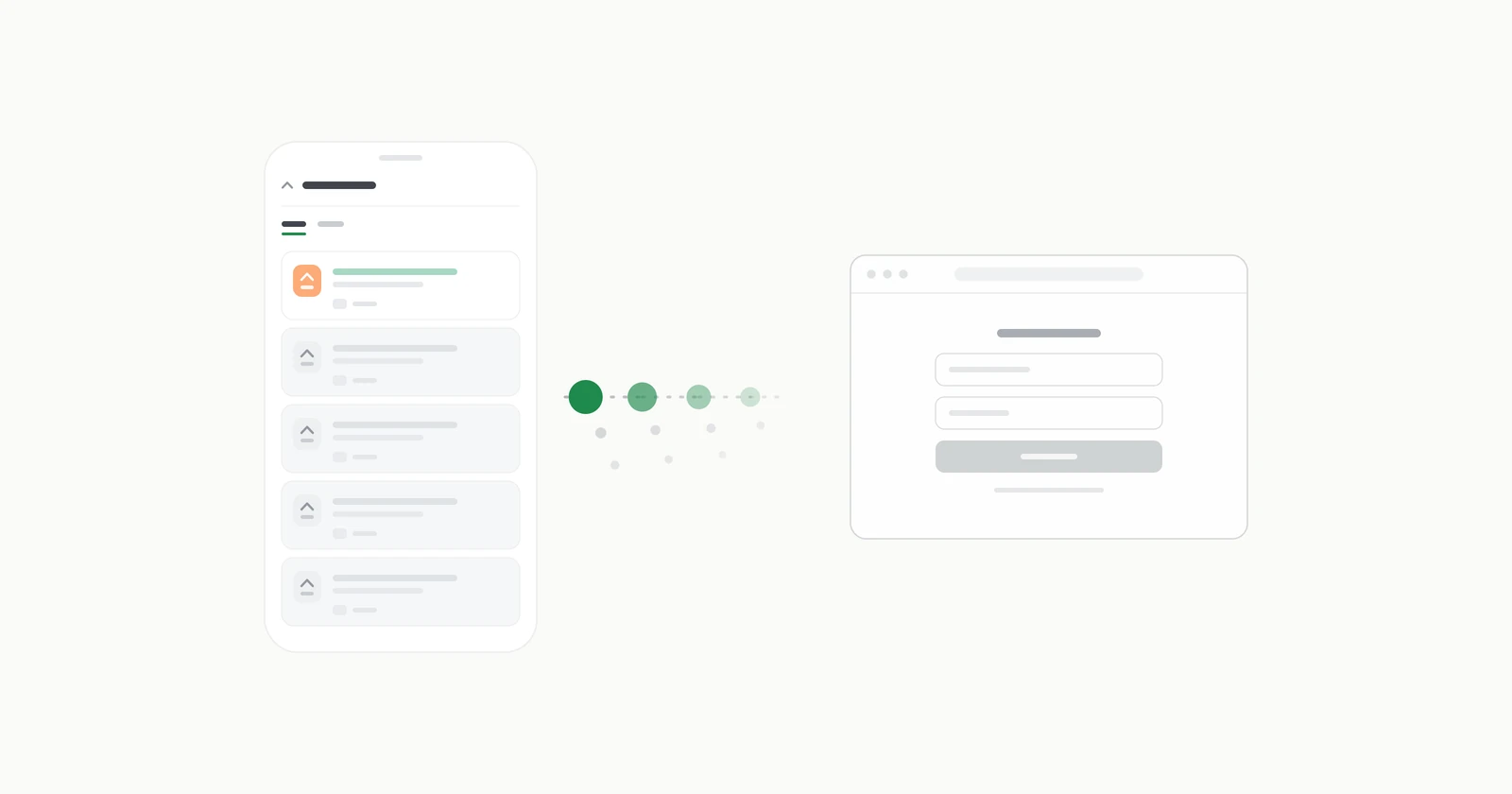
- Can users post and vote without an account? Many mobile apps have no login. If the tool needs an email, SSO, or a sign-up before a vote counts, most of your users will not vote.
- Voting, roadmap, and statuses. Voting turns requests into a ranking; statuses let the person who asked see it move.
- Free tier. Is there one, and what does it cap: apps, voters, requests, or tracked users?
- Cheapest paid plan. The published entry price, and what it is metered on.
- What it is really for. Feature voting, bug reporting, customer support, or observability. A tool built for one does the others as a side feature. How support tools and feedback boards differ is its own post.
How do the seven tools compare?#
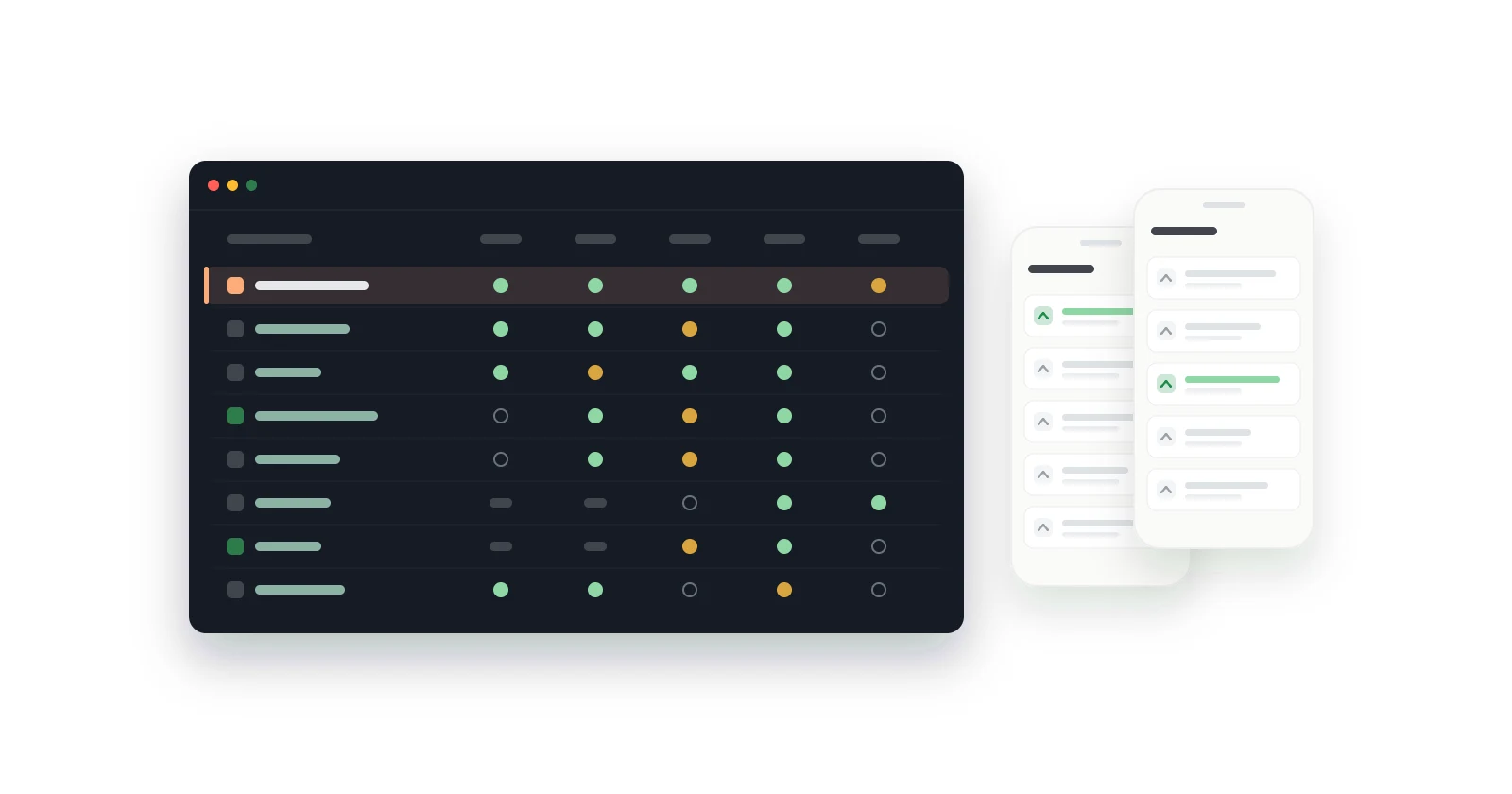
FeedbackJar, Shpd and fedo are native on both Android and iOS; Features.Vote and WishKit are native on Apple platforms only; Canny and Gleap use a WebView. The table compresses each vendor's own pages, and the links are in the per-tool sections that follow.
| Tool | Android | iOS | Vote or post without an account | Voting + statuses | Free tier | Cheapest paid | Built for |
|---|---|---|---|---|---|---|---|
| fedo | Native (Compose) | Native (SwiftUI), beta | Yes | Yes, 5 statuses | 1 app, unlimited users, badge | Not published (early access) | Feature voting in mobile apps |
| FeedbackJar | Native (Views or Compose) | Native (SwiftUI) | Guest votes and comments, if enabled | Yes | None, 7-day trial | $9/mo | Feedback boards for SaaS and apps |
| Shpd | Native, from paid plan | Native, from paid plan | Yes, anonymous or email | Yes, roadmap | 1 app, 100 voters/mo, no SDK | £19/mo | Feature voting in mobile apps |
| Features.Vote | No SDK listed | Native (SwiftUI) | Yes, anonymous allowed | Yes, roadmap | None, 14-day trial | $9/mo | Voting boards, iOS SDK |
| WishKit | No SDK listed | Native (SwiftUI) | Yes, anonymous by default | Yes, 4 statuses | 1 project, 5 requests | $15/mo | Feature requests for Apple apps |
| Canny | WebView | WebView | No, SSO required | Yes | 25 tracked users | $79/mo, billed yearly | Web feedback portals |
| Gleap | WebView | WebView | Not verified | Team plan and up | None, 14-day trial | $49/mo yearly, no roadmap | Customer support suite |
Each tool, where it wins#
fedo#
fedo is the one I build. The Android SDK (com.getfedo:sdk-android 0.4.2 on Maven Central) renders the whole board in Jetpack Compose with one composable, FedoFeedbackScreen. The iOS SDK (0.4.0-beta.1, Swift Package Manager) does the same in SwiftUI with FedoFeedbackView, plus a submit-only sheet. Users post, vote, and comment without signing in: the SDK creates an anonymous user and you can attach your own ID later. Requests move through In Review, Planned, In Progress, Shipped and Closed.
Pricing: Starter is free for one app with unlimited users and a "Powered by fedo" badge. Plus (3 apps) and Pro (5 apps, unlimited team, webhooks) are early-access plans arranged by email, with no public price yet.
Pick something else if you need Flutter or React Native, a public web board, or a vendor with a long track record. Its limits have their own section.
FeedbackJar#
The most complete cross-platform option on this list. The Kotlin SDK ships a drop-in board built on framework views or Compose (min SDK 21), and its README states guests can upvote and comment without an account. The Swift SDK ships a SwiftUI FeedbackJarBoard for iOS 15+, with guest voting and commenting when those are enabled in your org settings. feedbackjar.com lists SDKs for React Native, Flutter, iOS and Android plus a web script, a public changelog, an MCP server, and plans at $9, $19 and $39 a month, marked early-bird pricing, each with a 7-day trial and no free plan.
Better than fedo if you ship React Native or Flutter, need a web board too, or want to triage requests from an AI coding agent over MCP.
Shpd#
Shpd at getshpd.app is the closest in intent to fedo: feature voting that lives inside a mobile app, and users "can participate with just an email address, or anonymously". The pricing on that page lists a free Solo plan (1 app, public voting board, 100 voters a month, roadmap, changelog, Shpd badge), then Studio at £19/month (5 apps, unlimited voters) where "Native iOS & Android SDK" first appears. Scale is £49 and Portfolio £149, with 20% off annually. Shpd also has beta programs, challenges, and push notifications on ship from Scale up.
Better than fedo if you want a published price today, several apps on one plan, or the extras like beta programs.
Features.Vote#
A voting board with a genuinely native Apple SDK. The iOS SDK page describes real SwiftUI views for iOS 16+, iPadOS and macOS 13+ ("There is no WebView"), with a roadmap view grouped by status, a changelog view, and anonymous voting and comments as an option. Pricing is flat: Lite $9/month ($90/year) for one project, Growth $29/month for unlimited projects, no interaction limit, after a 14-day trial. I found no Android SDK on its site.
Better than fedo if your app is Apple-only, you want macOS too, or you want a changelog alongside the board.
WishKit#
WishKit is a SwiftUI SDK for iOS, macOS, visionOS, watchOS and tvOS, plus a web SDK that embeds the same board. Its docs say users are anonymous by default and can post, vote and comment without signing in, and list four statuses: Planned, In Progress, Completed, Rejected. The free plan is one project and five feature requests; Premium is $15/month, or $12.50/month billed yearly. No Android SDK is documented.
Better than fedo if you are Apple-only, especially on visionOS, watchOS or tvOS, where fedo has nothing.
Canny#
Canny is a web feedback portal, and it is very good at that. On mobile, its mobile widget docs have you load webview.canny.io in a WebView (a WKWebView on iOS) and state that "the mobile widget only works with SSO". There is no native SDK and no anonymous in-app path. Pricing is metered on tracked users: free for 25, Pro from $79/month billed yearly for 100+, Business custom with SSO and CRM integrations.
Better than fedo if your product is on the web first, your users are already signed in, and you want a mature public board with integrations. More in fedo vs Canny.
Gleap#
Gleap is a customer-support suite: AI support agent, live chat, bug reporting, help center, surveys. Its docs list SDKs for iOS, Android, JavaScript, React Native, Flutter, Capacitor and Cordova. The SDKs install natively, but the widget itself is web content: the iOS SDK source renders it in a WKWebView, and the Android SDK layout in a WebView. Pricing has no free plan and a 14-day trial; Starter is $49/month billed yearly ($59 monthly) without the feature roadmap, which starts on Team at $149/month billed yearly ($179 monthly).
Better than fedo if you want support, chat, bug reports with context, and a roadmap in one tool, and the budget fits. More in fedo vs Gleap.
Which in-app feedback SDK should you choose?#
Start from your platforms and your main job, not from the feature lists.
- Native Android and iOS, voting is the job, users are anonymous: FeedbackJar, Shpd, or fedo. FeedbackJar if you also ship React Native or Flutter; Shpd if you want a public price and multiple apps; fedo if a free plan with unlimited users and no voter cap matters most.
- Apple platforms only: Features.Vote or WishKit. Both are native SwiftUI and cheap.
- Web product first, signed-in users: Canny.
- Support and bug reports first, voting second: Gleap.
Test the "no account" claim yourself. Install the SDK, open the board on a fresh install without logging in, and try to vote. Several tools support anonymous voting only after a setting is switched on, or only with SSO.
What happened to UserVoice's mobile SDKs?#
UserVoice used to ship native iOS and Android SDKs, and both repositories are now archived. The Android SDK README opens with "[DEPRECATED] This repository is no longer actively maintained", and the iOS SDK repository is archived too. On mobile, UserVoice today means sending users to its web portal. The history and the alternatives are covered in UserVoice alternatives for mobile apps.
What are fedo's limits?#
fedo is in early access, built by a small team, and I have no customer numbers to show you. Concretely:
- The iOS SDK is a beta (0.4.0-beta.1). SwiftPM needs an exact-version pin to install it.
- There is no Flutter or React Native SDK, and none is planned right now.
- There is no public web board; the board lives inside your app, and the dashboard is for you.
- Plus and Pro have no published price. You email to get early-access terms.
- The iOS SDK has no appearance configuration yet, and neither SDK retries failed requests or works offline.
If any of those is a deal-breaker, one of the tools above is the better choice today, and I would rather you pick it than find out after integrating.
How was this comparison checked?#
On 29 September 2026 I read each vendor's own pricing page, documentation, and public SDK repositories, and linked each fact to where it came from. I did not use review sites or other vendors' comparison pages. Where a page was ambiguous or unreachable, the fact is marked "Not verified" or left out. Prices change; if something here is out of date, email hello@getfedo.com and I will fix it.